
Before booking a concrete pump, it is important to have the right site and pour details prepared so the job can run safely, efficiently and without costly delays. Whether the project involves footings, driveways or large concrete slabs in the Hunter Valley, early planning helps confirm the right pump type, access requirements, concrete volume, labour needs and delivery timing. Site conditions and truck coordination can have a major impact on how smoothly the pour progresses once pumping begins.
This article explains what should be checked before locking in a concrete pump booking. It covers site access, pump setup areas, concrete volumes, pour preparation, labour planning, safety controls and delivery schedules. With the right preparation, the pumping process becomes more predictable and easier to manage from the first truck arrival through to the final finish.
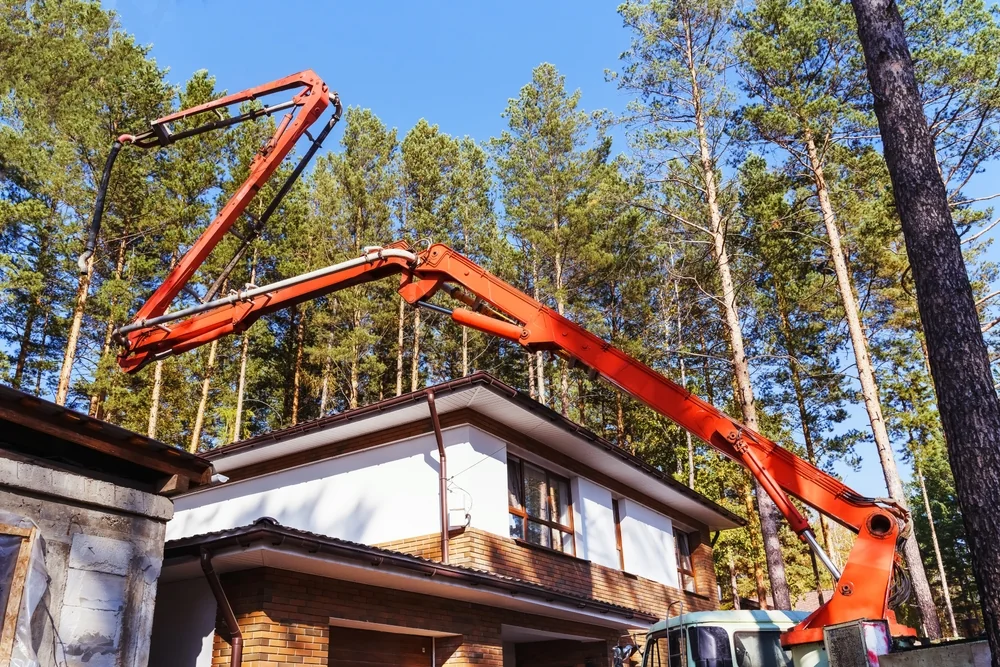
Having clear details about the size of the pour, the volume of concrete required and the type of placement planned is essential before booking a concrete pump. These factors influence the pump size, hose setup, crew requirements and time allocation on the day.
Good planning at this stage helps prevent delays on site, over- or under-ordering concrete and unexpected access issues once the pump arrives.
Start by measuring the footprint of the pour in metres. For slabs and driveways, measure length and width at several points rather than relying on one measurement, especially where the area has an irregular shape or widens in sections. For footings and beams, measure the length along with the cross-sectional dimensions.
Thickness is just as important as surface area. A slab that varies between 100 mm and 150 mm should be calculated carefully, with thicker sections allowed for unless a detailed take-off has been completed. Where the slab or footing steps down, each level should be measured separately.
Irregular shapes can be broken into simple rectangles or triangles and calculated individually before adding the totals together. A simple sketch with dimensions marked can also help the pump operator understand the layout and anticipate hose routing or boom positioning.
Concrete quantity is measured in cubic metres. To calculate the volume, multiply the area by the thickness in metres. For example, a 10 metre by 5 metre slab at 100 mm thick would require approximately 5 cubic metres of concrete before any allowance is added.
Once the basic volume is calculated, allow a small margin for waste, uneven ground and minor changes on site. For typical residential work, this is often around 5 to 10%. Tight excavations, heavily reinforced areas or uneven subgrades may require a slightly higher allowance.
The expected volume directly affects which pump is suitable and how long it will be needed. A small line pump may be suitable for a tight backyard or smaller pour, while larger slabs or multiple truckloads may require a boom pump to keep placement moving and reduce the risk of cold joints.
The type of pour influences pump selection, hose diameter, crew numbers and pour speed. Before booking a pump, clarify whether the job involves a slab, suspended deck, footing, columns, walls or piers.
It is also important to explain whether the pour is indoors, under a roof or fully open, as this can affect clearance, hose handling and pump positioning. The distance from truck access to the furthest point of the pour should also be confirmed so the pumping contractor can assess whether a boom pump, line pump or extended hose setup is required.
Clearly defining the size, volume and pour type before booking allows the pump operator to recommend the most suitable setup for a safer and more efficient pour.
Poor access is one of the most common reasons concrete pumping jobs run behind schedule or incur extra costs. Before booking, confirm that both the pump and concrete agitator trucks can safely reach the site, position correctly and work without obstruction for the full duration of the pour.
Access checks should cover the street approach, driveway, site entry and the path between the pump and the pour location. Careful planning helps avoid delays, stand-down charges and last-minute changes to the pump size or method.
Start at the nearest main road and work forward to the actual pour area. Large pump units and concrete trucks need more room than standard site vehicles, particularly when turning, reversing or operating near boundaries. Check road width, driveway entry, turning space and whether nearby traffic islands, tight bends or roundabouts could affect access.
Overhead obstacles also need to be considered. Powerlines, NBN cables, tree branches, awnings and low structures can restrict where a pump can safely set up or unfold a boom. On rural or semi-rural sites, bridge and culvert weight limits should also be checked before heavy vehicles enter the property.
Driveways and shared accessways should be assessed for width, steepness and surface condition. Soft verges, old pavers, loose gravel or lightweight culverts may not support heavy vehicles. If trucks cannot safely reach the slab or footing area, a larger boom pump or longer line run may be required.
A concrete pump needs a stable, level area where it can set up safely. This is especially important for boom pumps, where outriggers must be fully deployed according to the operator’s safety requirements. Before booking, confirm there is enough clear space for outriggers or support legs to extend properly.
The setup ground must be firm, compacted and able to support heavy loads without sinking or shifting. Areas near trenches, retaining wall edges, underground tanks, recent backfill or soft garden beds should be avoided. If there is any concern about soil strength, slope or fill, this should be discussed with the pumping contractor early so alternate setup locations or additional support measures can be planned.
The setup area should also be checked for overhead powerlines and other obstructions. If access is tight, the contractor may recommend a different pump type, an alternative position or line pumping from a safer location.
Where the pump cannot reach directly with a boom, a line will need to be run from the pump to the pour location. That path must stay clear and safe for the crew throughout the entire pour.
Walk the proposed route and check the distance from the pump setup area to the pour, including level changes, steps, narrow gaps, sharp corners and potential trip hazards. Access through side paths, between buildings or along boundaries should be checked before the booking is confirmed.
The line should not be blocked by materials, vehicles or other trades once the pour starts. If hoses need to cross driveways, footpaths or shared access areas, protection and traffic management may be required. On multi-level work, confirm whether pumping will occur from street level to upper floors and whether scaffolds, openings or penetrations are ready to take the line safely.
The pour area must be ready before a pump is booked so that time on site is used productively and the concrete can be placed without unnecessary delays. Good preparation also reduces the risk of formwork movement, honeycombing, weak edges and costly rework.
A properly prepared site gives the pump operator clear access, a stable setup position and a defined area for concrete placement. These details should be completed and checked before locking in the pump booking.
Formwork should be fully installed, braced and checked before the pump is ordered. All edges must be secure enough to withstand the pressure of pumped concrete. Loose, under-braced or poorly aligned boards can move or fail once the line is charged and concrete begins to flow.
Correct levels and falls should be set and verified with a laser or level. Once the slab or footing has been poured, there is no practical way to correct major level issues without costly rectification. Last-minute packing or re-levelling on pour day slows the crew and wastes pumping time.
There also needs to be enough room around the formwork for workers to move safely, handle hoses and finish the concrete properly. Stored materials, spoil piles, tools and offcuts should be cleared before the pump arrives.
The subgrade beneath slabs and around footings must be compacted and trimmed to the final height before booking. Soft spots or unprepared ground can settle after the pour and lead to slab cracking, uneven surfaces or weak areas.
Where a crushed rock base is specified, it should be placed, levelled and compacted rather than left loose or roughly spread. Any polythene vapour barrier should be fully laid with joints taped and no large wrinkles or tears.
Steel reinforcement must be tied in position on appropriate bar chairs rather than left loose on the ground. Mesh, bars and starter rods should be checked before the pump arrives so they are not displaced once concrete placement begins.
The pour area and approach must be safe for the concrete crew and pump operator. Trip hazards such as offcuts, mesh ends, loose tools and rubble should be cleared from walkways and around the forms.
The location of underground services, including water, gas, power, sewer and communications, should be known and clearly marked where relevant. Hoses, outriggers and truck wheels should not be positioned over vulnerable or unprotected services without proper assessment.
A washout area should also be prepared in advance. Pump and truck washout water must be contained properly so slurry does not enter stormwater drains, gardens, neighbouring properties or waterways. Having a designated washout location ready helps clean-up run more efficiently and reduces environmental risk.
Coordinating concrete supply with pump arrival is critical to avoid cold joints, wasted concrete and expensive standby charges. The aim is to have the first truck on site once the pump is ready to start, then keep trucks arriving at a steady pace until the pour is complete.
Good timing reduces pressure on the crew and helps protect the finish quality. Poor timing can result in rushed placement, excessive waiting time, concrete starting to stiffen in the truck or delays that force a reschedule.
Accurate quantity and mix information is the foundation of reliable scheduling. The concrete supplier will use these details to allocate trucks and set a delivery programme that suits the pump and the pour.
Before confirming the order, check the total volume required, including any allowance for waste. Confirm the concrete strength, slump and any additives, such as retarders or plasticisers. The mix must be suitable for pumping while still meeting the project requirements and specified finish.
Pump output rate also needs to be considered. A line pump on a tight residential site will usually place concrete more slowly than a boom pump on an open slab. The delivery schedule should match the realistic placement rate rather than a best-case scenario. Overbooking trucks can create congestion and increase the risk of concrete sitting too long before it is placed.
Once volumes and travel times are known, set a staggered truck schedule that keeps the pump working without long breaks. The first truck should be timed so the pump has enough time to set up, prime the line and complete any safety checks before discharge begins.
Confirm the exact time for the first truck and the spacing between following loads based on pump capacity, site access and pour complexity. For larger or staged pours, the final load should be timed carefully so the last section can be placed and finished without unnecessary waiting.
Any site restrictions should also be communicated to the supplier. Noise curfews, shared driveway use, school zones, narrow roads or limited truck parking can all affect delivery timing. If the weather is uncertain, confirm cut-off times and postponement procedures so the pump and concrete supply remain aligned.
A successful concrete pump job depends on more than the pump arriving on time. Labour, tools and safety arrangements must be organised before booking so the pour runs smoothly and concrete can be placed efficiently.
Before confirming a pump booking, know who will be on site, what each person will be doing and whether all required equipment and safety controls are ready. This is especially important where access is tight, delivery windows are limited or traffic management is required.
Concrete pumping does not remove the need for labour. It changes how that labour is used. The pump operator manages the machine, boom or hose, but the site crew is still responsible for placing, spreading, vibrating and finishing the concrete.
Before booking the pump, confirm there are enough competent workers to manage the hose at the pour face, place concrete to the correct levels, vibrate where required and finish the surface within the workable time. Understaffing can quickly lead to delays, poor placement and rushed finishing.
Assign clear roles before the first truck arrives. One person should direct communication with the pump operator, another should liaise with the concrete supplier or batch plant, and another should monitor formwork, bracing and levels. Clear responsibility avoids confusion and stops multiple people giving conflicting instructions during the pour.
Every tool required for placing and finishing concrete should be on site, in working order and positioned near the pour area before the pump arrives. This may include screeds, floats, trowels, shovels, rakes, vibrators, extension leads, hoses, curing products and any finishing equipment required for the surface.
Check power supply, fuel levels and backup equipment before booking, especially on sites where replacement tools are not nearby. Clean access paths should be maintained for workers, wheelbarrows or finishing machines.
If line pumping is required, confirm there is enough room for hose runs and that any reducers, elbows or accessories requested from the pump provider match the planned setup. Obstructions or last-minute layout changes can extend pump time and increase truck waiting charges.
Concrete pumping presents specific hazards, particularly around moving booms, high-pressure lines, reversing trucks and wet concrete. Before booking, confirm that basic safety controls can be implemented and maintained for the duration of the pour.
Safe access for the pump truck must be available, with enough room for setup and truck movement. Exclusion zones around the pump, hopper and hose should be planned so only essential workers are nearby during operation. Where public areas, neighbouring properties or shared driveways are close, temporary barriers, spotters or traffic control may be required.
Personal protective equipment should be available for everyone involved. Wet concrete can cause skin burns, so workers should use appropriate gloves, eye protection, long sleeves, long pants and suitable footwear. For sites near powerlines or in tight streets, additional controls such as no-go zones, spotters or specific setup locations may be required.
In the days leading up to pump day, every key detail should be checked again to avoid costly delays and cold joints in the pour. Final confirmation is about timing, access, mix design and safety so the pump can arrive, set up and start placing concrete without interruption.
This is also the time to compare the details given at booking with the actual site conditions. Any last-minute changes to slab size, mix design, volume or access should be communicated before the pump truck is on the road.
Pump and concrete bookings must align. The confirmed arrival time of the pump should match the first concrete delivery closely enough to avoid waiting time while still allowing the pump crew to set up properly.
At least 24 hours before the pour, reconfirm the date and start time, site address, entry point, estimated total cubic metres and order of pours if there are multiple sections. If the concrete volume has changed, confirm that the pump capacity and concrete supply can still handle the adjustment.
For larger or staged pours, confirm expected truck turnaround times so the pump is not left idle between loads. This helps reduce standby costs and keeps placement moving at a steady pace.
Reinspect the site once formwork, services, scaffolding and materials are in place, as conditions often change between quoting and pour day. Make sure the access route is clear of parked vehicles, skip bins, stockpiles, scaffolding and other obstructions.
Check that the setup area is still firm, level and suitable for the pump. Recently backfilled, waterlogged or disturbed ground may no longer be safe for outriggers or heavy vehicles. Overhead powerlines, trees and structures should also be checked again to ensure they will not interfere with the boom or hose route.
If access is tight or conditions have changed, organise a solution before pump day. This may involve moving materials, arranging traffic control, changing the pump location or using a line pump instead of a boom pump where suitable.
Successful concrete pumping depends on more than simply booking the right equipment. Accurate measurements, clear site access, stable setup areas, coordinated concrete deliveries and well-prepared labour all help the pour run safely and efficiently.
By confirming these details before pump day, builders, concreters and property owners can reduce the risk of delays, cold joints, equipment changes and avoidable extra costs. Careful preparation supports smoother concrete placement and a stronger result from start to finish.