
Choosing between a boom pump and a line pump can determine how efficiently a concrete pour progresses, how controlled the placement is and how consistent the final result will be. For projects involving concrete pumping in Hunter Valley, the right pump selection has a role in managing site constraints, labour demands and overall project cost. Each system performs differently depending on access, reach and pour volume, making it essential to align the equipment with the conditions on site rather than forcing the site to suit the equipment.
A boom pump delivers concrete through a hydraulic arm, making it highly effective for elevated pours, long reach requirements and large volumes where speed is critical. A line pump relies on ground-based hoses, offering greater flexibility for tight access sites, smaller pours and complex layouts where manoeuvrability matters more than output. By understanding how these systems compare in real conditions, it becomes easier to select the option that supports a smooth, controlled and cost-effective pour from start to finish.
The key difference between a boom pump and a line pump is how the concrete is delivered from the truck to the pour area. A boom pump uses a large, hydraulic robotic arm to place concrete from above, while a line pump uses flexible or steel hoses laid along the ground to reach the pour.
Both options deliver concrete efficiently, but they suit very different site conditions and job types. Understanding how each operates and what each can and cannot do makes it easier to choose the right pump for the job.
A boom pump is mounted on a truck and has a multi-section hydraulic arm that unfolds and extends to reach the pour area. The concrete is pumped through a pipeline along this boom, then discharged directly where it is needed. The operator controls the boom with a remote, so placement can be extremely precise even in hard-to-reach spots.
Boom pumps are ideal where access for the truck is good, but the pour location is high or distant. Typical uses include multi-storey slabs, upper-level decks, large commercial slabs and jobs where concrete must go over buildings, fences or other obstacles. Boom reach can range from around 20 metres to more than 50 metres, reducing the need for extra labour to move hoses or barrow concrete.
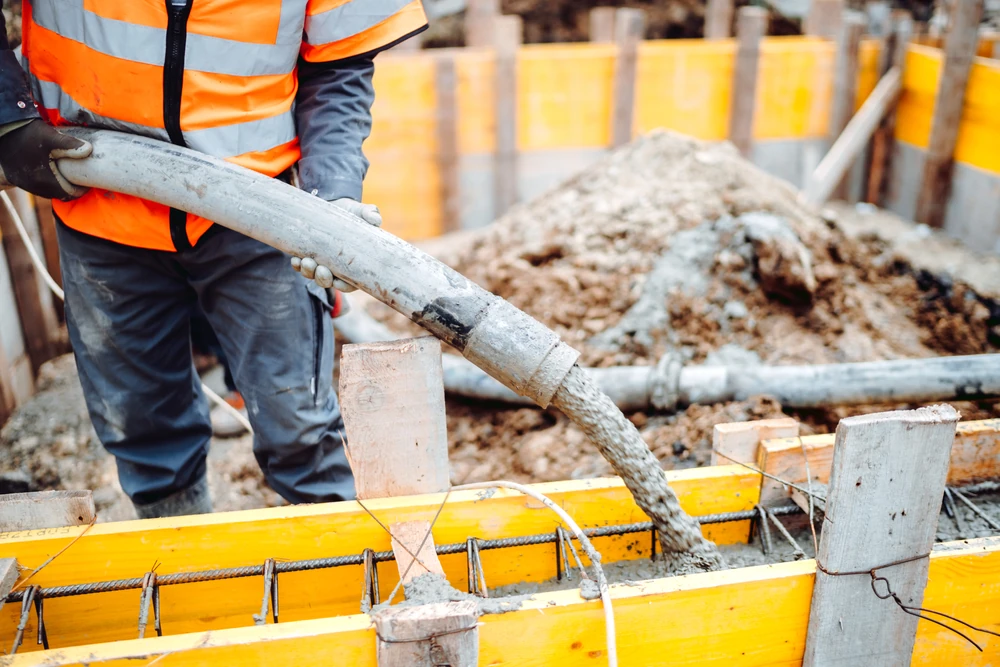
A line pump uses a pump unit connected to a series of steel pipes or flexible hoses laid along the ground or threaded through tight access points. Concrete is pushed through this line to the pour area. The line can run up or down stairs through side paths, under structures or around the back of properties where a truck cannot reach.
Line pumps are suited to smaller pours and sites with restricted access, such as backyards, townhouse developments, residential slabs, footings, block fill and shotcrete. They generally handle standard mixes and smaller aggregate sizes efficiently. Line length is highly flexible and can often be extended well beyond 50 metres by adding more pipe or hose sections.
In practical terms, a boom pump trades higher reach and faster placement for a need for more set-up space and truck access. A line pump trades slower delivery and more hose handling for much greater flexibility in tight or awkward locations.
For large-volume pours where time is critical and access allows, a boom pump is usually preferred. For smaller pours, multiple small locations, or difficult access, a line pump is often the more efficient and economical choice.
Choosing between a boom pump and a line pump starts with three practical questions: how big is the pour, how easy is it to get to and how far or high the concrete has to travel. Matching these factors to the right pump type improves productivity, keeps costs under control and reduces the risk of delays on site.
While both pump types move concrete efficiently, they are not interchangeable. Each has a “sweet spot” where it delivers faster placement, better finish quality and safer operation. Understanding how job size, access and reach interact is the key to selecting the right setup for residential, commercial or civil work.
Pump choice shifts as the volume of concrete and the pace of delivery increase. For small to medium pours such as driveways, paths, patios or small house slabs, a line pump typically provides the best value. Set up is straightforward and line pumps handle moderate volumes without wasting plant capacity.
As volume and pour duration increase, a boom pump becomes more efficient. Large slabs, suspended decks, commercial floor plates and civil pours often require high output and sustained flow. A boom pump can:
For very small or broken-up pours, the higher mobilisation cost of a boom pump often cannot be justified. For slab pours that run all day, a boom pump usually repays its cost through time saved.
Access is often the deciding factor. Boom pumps are truck-mounted units that require adequate space for parking and for outrigger deployment. The ground must be relatively level and capable of supporting the load. Tight suburban streets, limited driveways, overhead powerlines and soft or sloping ground can all restrict boom pump use or require careful positioning.
Where the pump truck cannot safely get close to the pour area, a line pump often becomes the only viable option. On good open sites with solid standing room, a boom pump remains preferable for speed and reach.
Reach is not just about height. It includes the horizontal distance from the truck to the furthest point of the pour. Boom pumps use a multi-stage articulating arm that can place concrete over houses, into rear yards, up multi-storey frames or across large slabs without relocating the truck. This is ideal for upper-floor slabs, retaining walls, basements and large industrial floors.
Line pumps rely on steel and rubber lines that can be laid along the ground or supported on a structure. They can achieve significant reach, but every extra metre of line increases the pumping resistance, set-up time and cleaning time. Long line runs also demand suitable routeing to avoid trip hazards and sharp bends.
A boom pump is generally the stronger option when the job demands fast placement, long reach or access over obstacles that make line routeing difficult. It combines a truck-mounted pump with a remote-controlled articulating boom, allowing concrete to be placed directly where it is needed without dragging hoses across the site.
Choosing a boom pump is often more about site logistics and access than concrete volume alone. Height, reach, safety and time constraints all influence whether the flexibility of a boom arm will deliver a smoother and more efficient pour.

Boom pumps excel whenever concrete needs to reach a height or distance off the ground. The boom can place concrete directly into upper floors or elevated slabs without relying on scaffolding or temporary chutes.
Typical uses include multi-storey residential or commercial builds, high retaining walls, bridge decks, mezzanine slabs and suspended slabs over garages or driveways. In these situations, the boom can reach over the structure or from the street frontage and feed concrete to upper levels while the truck stays safely on stable ground.
When the pour area is obstructed by buildings, fencing or landscaping, a boom pump often becomes the most practical solution. The boom can reach over houses, walls, pools, gardens and existing structures to land the concrete exactly where it is needed.
This is useful in tight suburban blocks, rear-of-block extensions, infill developments and sites with limited entry due to narrow driveways or shared access. Instead of threading hoses around obstacles or through interiors, the boom can work from the street or front drive and place concrete in the backyard, side path or enclosed courtyard.
For large slabs, commercial floors or any pour where speed is critical, a boom pump usually delivers a higher output and faster placement than a line pump. The boom allows concrete to be distributed across a wide area quickly with minimal repositioning.
This suits industrial slabs, warehouse floors, supermarket or retail buildings, car parks and larger house slabs where multiple agitator trucks are scheduled in tight succession. The radius of the boom arm means the operator can work methodically across the pour area, helping finishers maintain a wet edge and reducing cold joints.
A line pump is often the most practical and cost‑effective option for smaller or more detailed concrete work where flexibility and control matter more than sheer reach or speed. It uses flexible hoses that can be run across the ground, through structures or around tight corners to place concrete precisely where it is needed.
In many residential and light commercial projects, a line pump can access awkward spaces that a boom truck cannot reach or cannot set up safely. It also suits mixes and volumes that do not justify the higher mobilisation cost of a boom pump.
Line pumps excel on sites with limited access or restricted setup space. If a project is behind an existing house down a narrow driveway or on a steep or uneven block, a boom truck may not be able to stabilise safely. A line pump can be positioned in the street or front yard with hoses running to the pour location.
This is especially useful where there are low power lines, trees or building overhangs that prevent a boom from unfolding. Hoses can be threaded through side paths under scaffolding, through carports or even through internal doorways for indoor slabs or toppings. For infill developments or inner-city sites with tight boundary clearances, a line pump often becomes the only practical pumping option.
For small to medium pours, a line pump is usually more economical. Jobs such as driveways, footpaths, shed slabs, pool surrounds, retaining wall footings and garden edges rarely need the high output of a boom pump. Line pumps handle these volumes efficiently without the higher hourly rates and minimum charges typically associated with boom equipment.
The slower, steady discharge from a line pump is also an advantage for detailed or heavily reinforced work. It gives finishers more time to manage the surface and helps avoid displacing reinforcement in narrow beams or footings. For topping slabs, patch pours or extensions to existing slabs, the controlled flow helps achieve a better join and reduces the risk of cold joints forming.
Choosing between a boom pump and a line pump starts with understanding the site and the pour, not the machinery. Before locking in a booking, several practical checks help avoid delays, added costs and unsuitable equipment arriving on the day.
A brief site assessment, accurate measurements and clear information about the concrete and schedule give the pumping contractor what is needed to recommend the right pump and set up safely.
The nature of the job heavily influences which pump is appropriate. Large slabs, foundations and commercial pours with high volumes usually benefit from a boom pump for faster placement and reduced labour on the hose. Smaller residential jobs like footpaths, driveways, void fills or tight backyard pours often suit a line pump where access is restricted.
Estimate total cubic metres of concrete and the required pour rate. High-volume pours with continuous supply from the agitator fleet are more efficient with a boom that can place concrete quickly across a wide area. For intermittent, low-volume pours, a line pump is often more economical.
Pumpability of the chosen mix must be confirmed before booking. Inform the supplier and the pumping contractor of the required strength, aggregate size and any additives such as fibres or accelerators. Harsh mixes with large aggregate or very low slump can cause blockages, particularly in longer line runs.
Safety requirements on site also need review. Identify overhead powerlines, underground services, public footpaths and traffic areas. On tight suburban streets, traffic control or permits may be required for a boom pump to set up kerbside. Space for washout of the pump and hoses must be allocated away from drains and sensitive areas.
Finally, confirm the schedule and coordination with the concrete supplier. The pump should arrive early enough to set up before the first truck turns up. Accurate timing reduces standby charges and keeps the pour continuous.
Choosing between a boom pump and a line pump ultimately depends on how well the equipment aligns with site access, pour requirements and project constraints. Boom pumps provide clear advantages on large-scale, time-sensitive and elevated pours where reach and placement speed are critical. Line pumps offer greater flexibility for smaller volumes, confined spaces and detailed work where controlled delivery and adaptability are more important than output. Matching the pump to the job not only improves productivity but also reduces the risk of delays, rework and unnecessary costs, ensuring that concrete placement is carried out in a controlled and practical manner from start to completion.