
Shotcrete is a versatile concrete placement method suited to vertical, curved and difficult-to-access surfaces. Unlike traditional poured concrete, it can be sprayed directly onto a prepared surface, reducing the need for extensive formwork and making it useful for a range of structural and specialised projects.
Hunter and Coast Concrete Pumping provides concrete pumping solutions for residential, commercial and civil projects where efficient and reliable concrete placement is required. Shotcrete can be useful for projects involving retaining walls, pools, basements, tunnels and ground support where conventional concrete placement may be difficult.
For projects involving concreting in Hunter Valley, this article explains how shotcrete works, how wet-mix and dry-mix methods differ and where shotcrete is commonly used. It also covers its benefits, materials, curing requirements and the factors that influence the strength and durability of the finished concrete.
Shotcrete is concrete that is sprayed through a hose onto a prepared surface at high velocity, where it compacts and bonds on impact. Unlike traditional poured concrete, it can be applied directly to vertical, overhead, curved or irregular surfaces with less reliance on conventional formwork.
Shotcrete uses cement, aggregate, water and admixtures, fibres or steel reinforcement. It can be applied using either wet-mix or dry-mix methods, depending on the project size, access, required finish and application conditions.
When correctly designed and applied, professional shotcrete services can provide a dense and durable concrete layer suitable for structural walls, retaining structures, pools, tunnels, ground support and concrete repairs.
Shotcrete is applied by pumping or conveying concrete through a hose and spraying it at high velocity onto a prepared surface. The impact compacts the material against the substrate, allowing it to form a strong bond and build up to the required thickness.
Appropriate concrete pumping safety controls are also required to manage risks associated with the equipment, delivery hose, work area and application process.
The application process involves:
The choice between wet-mix and dry-mix depends on project size, access, site conditions and production requirements. Proper preparation, equipment setup and application technique help achieve the required result.
Shotcrete is commonly used where concrete needs to be applied to vertical, curved, overhead or irregular surfaces without extensive formwork. It is suitable for new construction and repair work, particularly where conventional pouring is difficult.
Shotcrete can be sprayed onto prepared soil, rock or structural supports to form retaining walls, basement walls and slope stabilisation systems. Reinforcement such as mesh, steel bars or soil nails can be incorporated where required.
Structural shotcrete is widely used in tunnels, mines and other underground works to stabilise exposed rock and provide structural support. It can be applied to uneven and overhead surfaces, making it suitable for tunnel linings, slope stabilisation and other ground support applications.
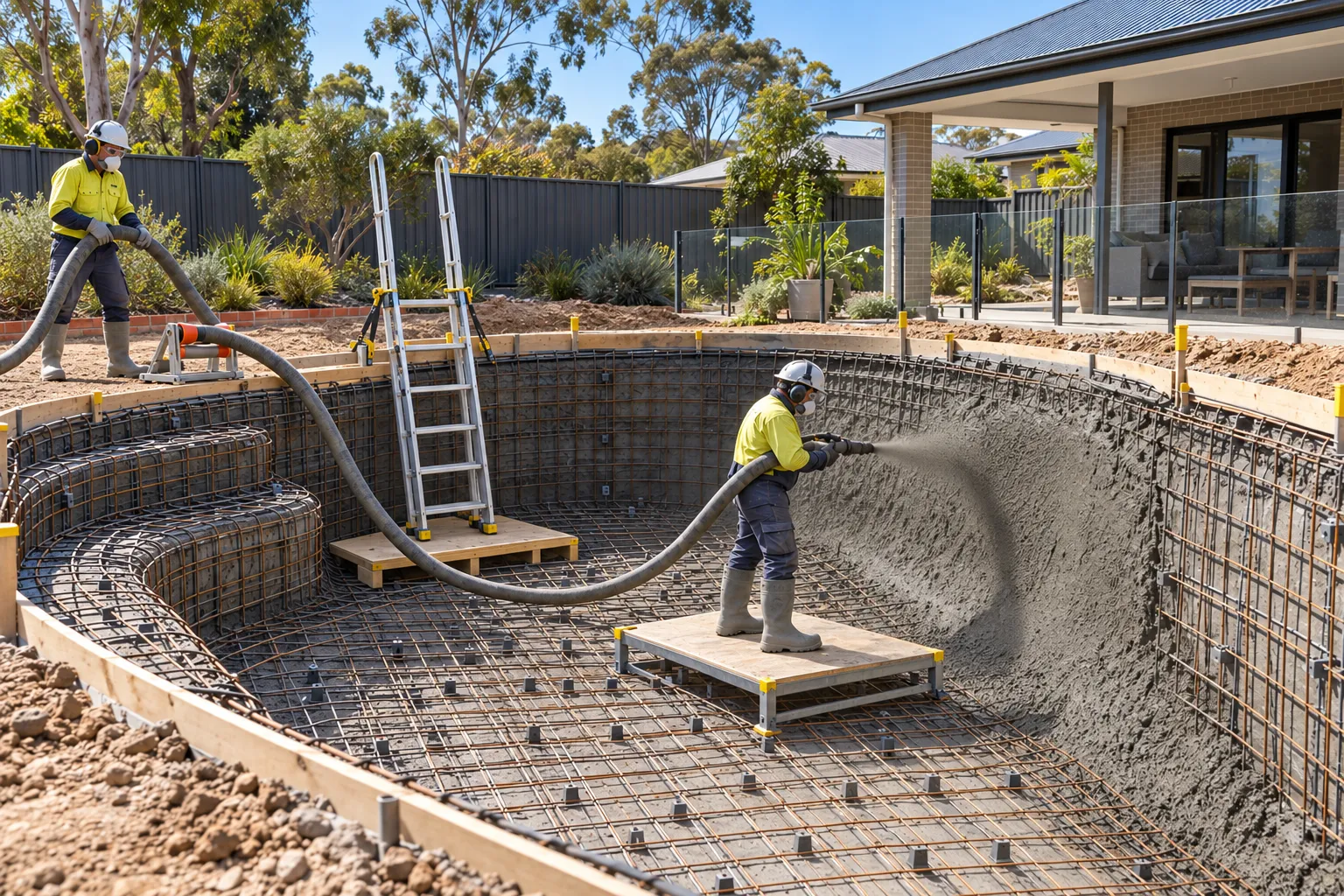
Shotcrete is commonly used to form swimming pool shells because it can follow curved shapes, varying depths and integrated features without extensive formwork. It can also be used for water tanks, structural repairs and speciality concrete features where complex shapes or difficult access make conventional pouring less practical.
Wet-mix and dry-mix are the two main methods used to apply shotcrete. The key difference is when water is added to the mix. Wet-mix is mixed with water before pumping, while dry-mix introduces water at the nozzle during application.
Wet-mix shotcrete combines the cement, aggregate, water and other ingredients before the material enters the pump. It is then pumped through a hose and projected onto the prepared surface with compressed air at the nozzle.
Wet-mix is commonly suited to larger projects because it supports consistent mixing and higher production rates. It can also produce lower dust and rebound levels when correctly applied.
Dry-mix shotcrete conveys the dry ingredients through the hose, with water added at the nozzle. The nozzle operator controls the water content during application, providing flexibility for smaller or more localised work.
Dry-mix can be useful for repairs, overhead applications and projects with limited access or frequent stopping and starting. It produces more dust and rebound than wet-mix and requires skilled nozzle operation.
Appropriate silica dust controls should be used to minimise worker exposure during dry-mix preparation and application.
The choice between wet-mix and dry-mix depends on factors like:
Both methods can produce durable, high-quality shotcrete when the mix, equipment and application process are properly controlled.
Shotcrete offers practical advantages where conventional concrete placement or formwork is difficult. Because it is sprayed directly onto a prepared surface, it can be applied to complex areas while providing dense compaction and strong adhesion.
Key benefits include:
These benefits can make shotcrete a practical option for retaining structures, slopes, pools, basements and other areas where access or formwork presents challenges. Final performance depends on appropriate mix design, surface preparation, reinforcement and application technique.
Shotcrete uses many of the same basic materials as conventional concrete, but the mix is designed for pumping and high-velocity application. The materials and proportions are selected according to the required strength, durability, thickness and application method.
The main materials used in shotcrete include:
The final mix is selected according to the structure, site conditions, access, required thickness and performance requirements. Proper material selection helps ensure the shotcrete can be pumped, applied and cured to the required standard.
Shotcrete strength and durability depend on the mix, surface preparation, application and curing process. Even a well-designed mix can perform poorly if the substrate is unsuitable, reinforcement is incorrectly positioned or the material is not properly compacted and cured.
These factors are included:
These need to be considered together to achieve the required structural performance. Proper mix selection, preparation, application and curing all contribute to the strength and long-term durability of the finished shotcrete.
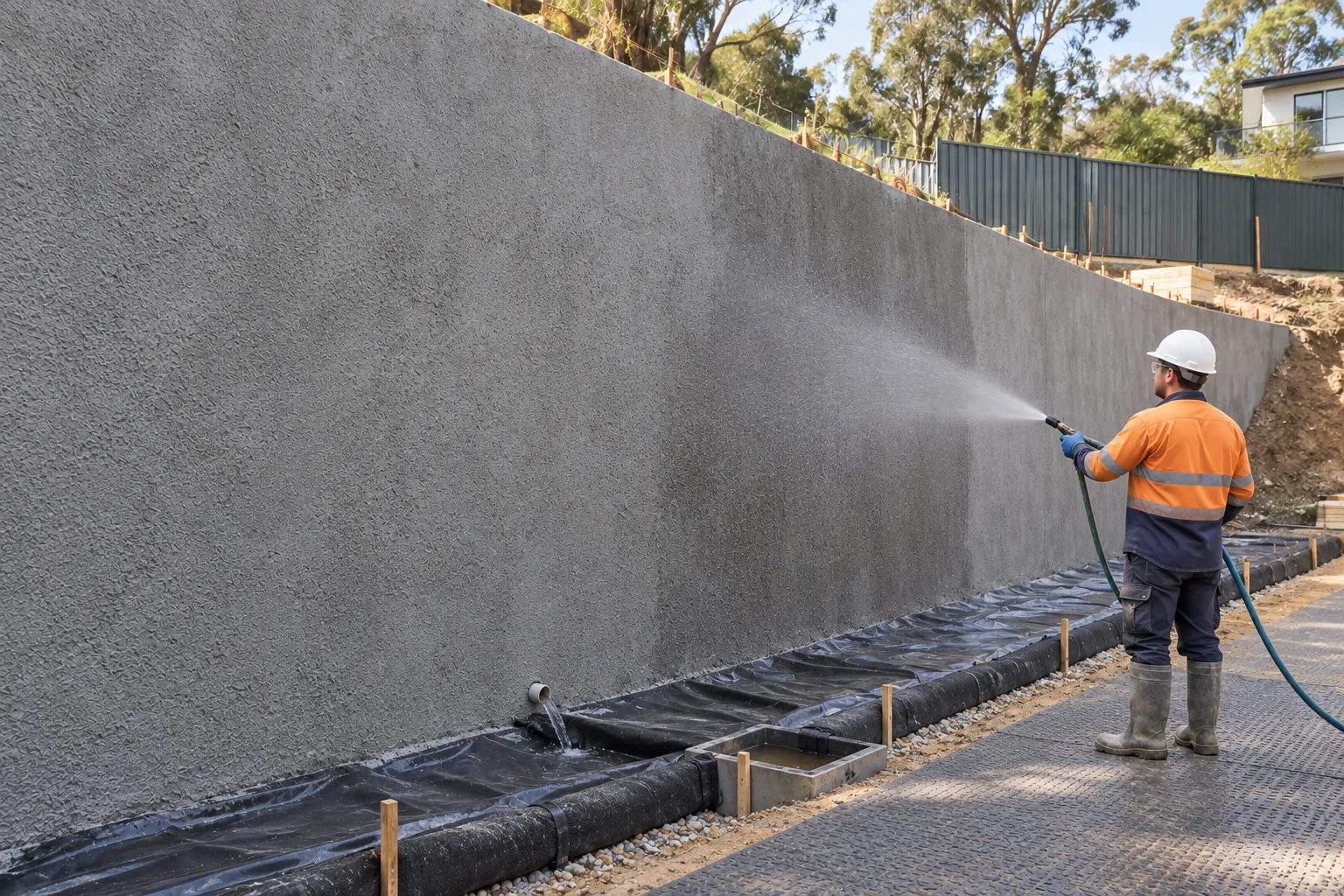
Shotcrete begins to harden soon after application, while its specified design strength is commonly assessed at 28 days. The time required can vary based on the mix design, thickness, temperature, moisture conditions and any accelerating admixtures used.
During curing, the cement continues to hydrate and the shotcrete gradually develops greater strength and durability. Keeping the material adequately moist and protected from premature drying is important for reducing shrinkage cracking and supporting proper strength development.
Shotcrete may be firm enough for some subsequent work within hours or a day, but the required strength for further construction or structural loading depends on the project specifications. Engineer requirements and strength testing should determine when the shotcrete is ready for the next stage rather than relying on a fixed timeframe.
Shotcrete and traditional concrete use similar basic materials, but the main difference is how they are placed. Traditional concrete is poured into formwork, while shotcrete is sprayed at high velocity through a hose onto a prepared surface. This allows shotcrete to be applied to vertical, overhead, curved and irregular areas with less reliance on conventional formwork.
Traditional concrete usually requires formwork to contain and shape the concrete during placement. Shotcrete can be sprayed directly onto a prepared surface and built up in layers, reducing the need for extensive formwork on suitable projects.
Shotcrete can be delivered through hoses into confined, steep or difficult-to-access areas where conventional pouring may be more challenging. The required concrete pump reach depends on the pump type, hose configuration, site layout and distance from the setup area. It does, however, require specialised equipment and skilled application to achieve consistent coverage and compaction.
Neither method is automatically stronger than the other. Both can achieve the required structural performance when the mix, reinforcement, placement and curing are properly controlled. The choice depends on factors such as site access, structure, required shape, formwork and construction requirements.
Shotcrete can be a practical option where conventional formwork or concrete placement presents challenges, while traditional concrete may remain suitable for straightforward structures where pouring and formwork can be carried out efficiently.
Shotcrete offers a flexible and efficient way to place concrete where traditional formwork or access can make conventional methods difficult. Its ability to follow complex shapes and be applied to vertical, overhead and irregular surfaces makes it suitable for retaining walls, pools, tunnels, ground support and structural repairs.
The quality and performance of shotcrete depend on the right mix design, surface preparation, reinforcement, application technique and curing. Hunter and Coast Concrete Pumping can provide specialist concrete pumping services, helping ensure shotcrete is placed efficiently and to the required specifications.