
Construction projects involving concreting in Hunter Valley rely on careful planning to keep every concrete pour on schedule. Even minor on-site problems can quickly lead to costly delays, leaving concrete trucks waiting, trades standing idle and additional pressure being placed on project timelines and budgets.
Hunter and Coast Concrete Pumping understands that a successful pour depends on more than booking concrete and concrete pumping equipment. Weather conditions, pump access, traffic, incomplete formwork, reinforcement issues, concrete supply problems and communication between contractors can all affect how smoothly the work progresses.
Recognising these risks before pour day allows builders, concreters and site supervisors to prepare effectively, reduce equipment downtime and keep concrete placement moving safely and efficiently.
Concrete pours are tightly coordinated operations. The concrete supplier, pump operator, site supervisor and finishing crew must all be ready at the correct time.
A delay at one stage can affect the entire sequence, increasing pump hire costs, truck waiting times and the risk of placement or finishing problems.
Common causes of pour-day delays include:
Many of these problems can be identified through thorough checks during the 24 hours before concrete is ordered.
Concrete should not arrive until the formwork, reinforcement, services and base have been fully prepared and checked. Attempting to complete these tasks while trucks and pumping equipment are waiting can result in significant delays or cancellation of the pour.
Formwork must be complete, stable and set to the correct dimensions and levels before placement begins.
Problems that can stop a pour include:
Formwork should be checked for line, level, height and squareness before pour day. Nails, screws, ties and bracing should also be inspected to confirm that the formwork can withstand the pressure and vibration created during placement.
Last-minute adjustments to falls, thresholds or slab dimensions can delay the first truck and disrupt the planned delivery sequence.
Reinforcing steel must match the relevant drawings and specifications and be securely tied before concrete placement.
Common reinforcement problems include:
Where a pre-pour inspection is required, it should be completed and approved by the engineer, certifier or other nominated inspector before concrete is ordered.
If reinforcement does not pass inspection, the pour may need to be delayed until the necessary corrections have been completed and rechecked.
The base beneath a slab or footing should be level, compacted and free from soft spots, rubbish, mud and standing water.
Common base-preparation problems include:
Where a membrane is specified, it should be laid flat, have sealed joints and be protected from tears.
Plumbing, drainage, electrical conduits and other embedded services should also be installed, tested and positioned correctly before reinforcement prevents easy access.
Pump access problems are among the most common and avoidable causes of delayed concrete pours. If a truck-mounted pump or line pump cannot reach the planned position or establish a safe setup, the entire pour may start late or need to be rescheduled.
Narrow streets, tight driveways, steep slopes and unfinished ground can prevent a concrete pump from reaching the intended setup location.
Access routes may also be obstructed by:
Even a small obstruction can force the pump to set up further away than planned. This can affect boom reach, hose length, line routing and the time required to place concrete.
Access routes should be cleared before the pump arrives. Neighbours and other trades may also need to be informed when parking areas, driveways or turning spaces must remain available.
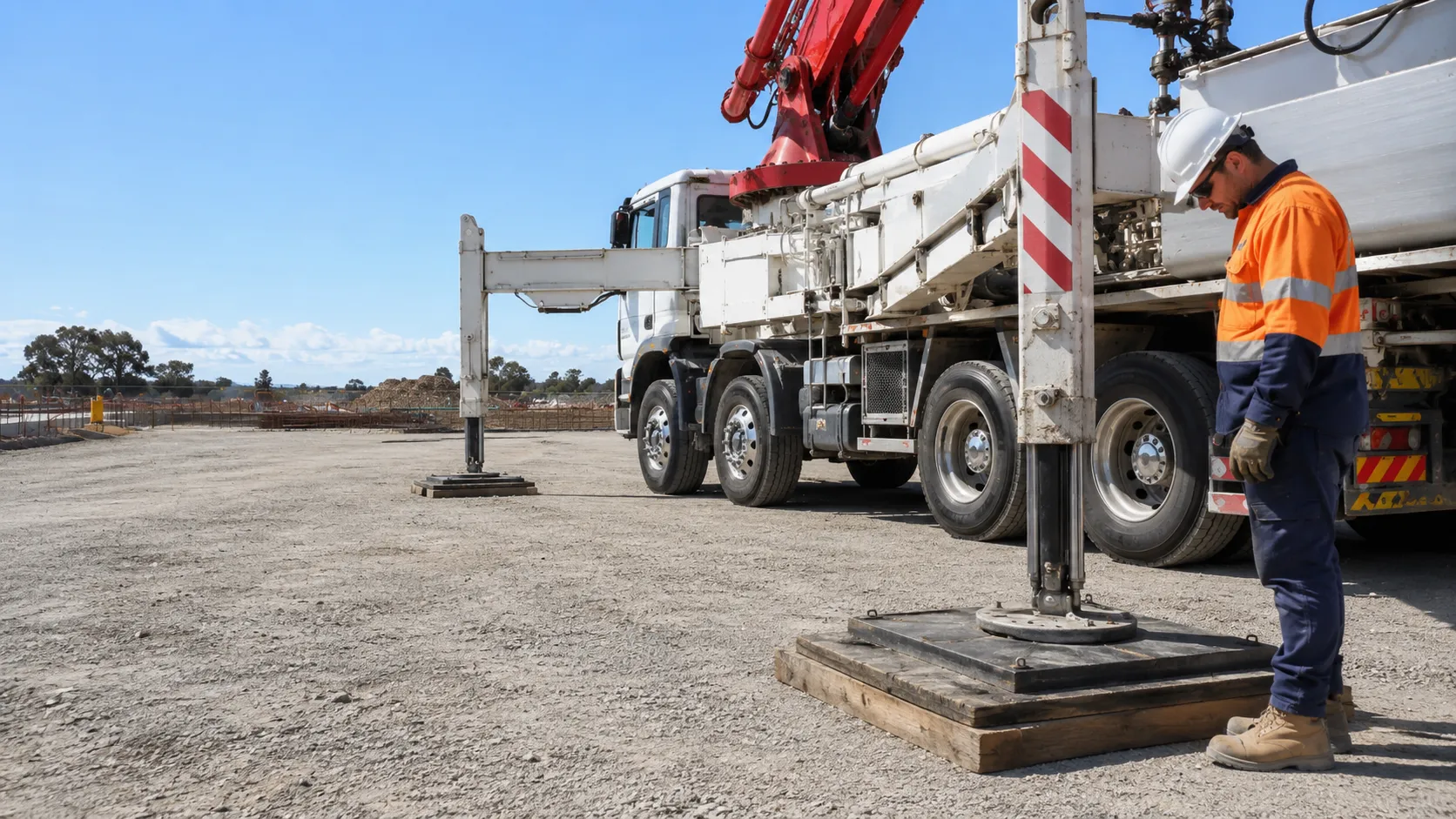
Concrete pumps require adequate space and stable ground for outriggers or stabilisers to be deployed safely.
Soft fill, uncompacted ground, recently backfilled trenches and steep crossfalls may not support the weight and operating forces of the equipment.
Before pour day, the intended setup area should be checked to confirm that the ground can support the pump and outriggers.
Where required, suitable mats, cribbing or engineered ground-support measures should be arranged in consultation with the pumping contractor.
The pump operator may refuse to set up if the ground conditions are considered unsafe.
Powerlines, telecommunications cables, low roofs and tree branches can prevent a boom pump from operating within a safe working area.
If overhead hazards are not identified until the pump arrives, the equipment may need to be repositioned or the pour may need to be postponed.
The site supervisor and pumping contractor should confirm:
Alternative equipment should only be used after the pumping contractor confirms that it is appropriate for the site and can be operated safely.
Concrete agitator trucks require safe access, suitable waiting space and an efficient route to the pump hopper or discharge area.
If trucks cannot move through the site smoothly, deliveries begin to fall behind and the concrete continues to lose workability while waiting.
Pre-pour planning should confirm:
Where direct chute placement is planned, the truck must be able to position close enough to the formwork.
Long barrowing distances can slow placement, increase physical demands on workers and make it more difficult to maintain a consistent workflow. Properly planned concrete pumping on tight-access sites can reduce long barrowing distances and keep placement moving at a more consistent rate.
Concrete plants schedule trucks according to an expected placement rate. When the site cannot receive concrete at that rate, trucks may queue on the street or be held at the plant.
Waiting commonly occurs because of:
Concrete continues to lose workability while the truck is waiting. Extended delays can also create gaps in the delivery sequence and increase the risk of cold joints.
Concrete that has been delayed should be assessed in accordance with the project specification and the supplier’s procedures. Water should not be added on site unless it is authorised and managed by the concrete supplier.
Even when trucks arrive on time, cramped or poorly organised unloading areas can slow the pour.
Problems may occur when:
A nominated person should coordinate truck movements, maintain clear access and communicate with the supplier when delivery rates need to be adjusted.
Ordering errors can stop a pour before it begins or leave the crew waiting for replacement or additional concrete.
The required volume and specification should be checked against the plans, engineering requirements and actual site dimensions.
Under-ordering can stop a pour partway through. If an exposed section begins to stiffen before the next load arrives, a cold joint or visible transition may form.
Over-ordering also creates problems where no suitable area has been prepared for surplus concrete. The crew may be forced to find additional minor works or arrange an appropriate disposal method while the truck and pump remain on site.
Volume calculations should account for:
Measurements should be checked against the completed formwork rather than relying only on preliminary plans.
The delivery docket should be checked before concrete is discharged.
The order may need to specify:
If the docket does not match the required specification, the site supervisor should contact the supplier before allowing placement to continue.
A mix that is too stiff may be difficult to pump and could increase the risk of line blockages. A mix that is excessively wet may affect finishing and could compromise concrete performance.
The concrete supplier should assess any concerns about workability or mix compliance. Uncontrolled water addition should not be used as a routine response to delayed or stiff concrete.
Concrete has a limited working time. Once discharge begins, the crew must be able to place, compact, level and finish the concrete at a rate that matches the delivery schedule.
A crew that is one or two people short may only be capable of managing a very small pour safely and efficiently.
Larger slabs, driveways and structural elements may require workers to perform several tasks at the same time, including:
At minimum, the site should have a competent supervisor or leading hand, sufficient placement workers and skilled finishers.
An under-resourced finishing team may begin work too late, resulting in uneven surfaces, torn concrete, inconsistent edges or poorly timed finishing.
Crew numbers should be matched to the size and complexity of the pour, the placement method and the expected weather conditions.
A successful pour relies on builders, suppliers, pump operators, concreters and finishers working to the same sequence.
Before the first truck leaves the plant, everyone should understand:
If trucks are spaced too far apart, the pump may sit idle and partially placed concrete may begin to stiffen.
If trucks arrive too quickly, the crew may become overwhelmed and finishing quality may suffer.
Regular communication between the pump operator, site supervisor and concrete supplier allows delivery rates to be adjusted before queues or gaps develop.
Changes to the pour volume, pump position, hose route or access arrangements should be communicated as early as possible.
Some external factors cannot be completely controlled, but their effect can often be reduced through early planning.
Concrete placement is sensitive to temperature, rain and wind.
Heavy rain can:
On hot days, concrete may lose workability and begin to stiffen more quickly. This can require an earlier start, additional labour, adjusted delivery rates and carefully planned curing.
Strong winds can accelerate surface moisture loss and increase the risk of plastic shrinkage cracking. Wind may also affect the safe operation of boom equipment, particularly near overhead services or restricted work areas.
The site supervisor, pumping contractor and supplier should review the forecast before the pour and confirm whether additional controls or scheduling changes are required.
Traffic on the M1, Pacific Highway and local Hunter Valley roads can affect truck arrival times.
Peak-hour congestion, accidents, roadworks and school zones can create unexpected gaps between deliveries.
Where practical, delivery times should be planned around known traffic conditions. The supplier should also be informed about difficult access routes, road restrictions and any preferred approach to the site.
Loads delayed in traffic may need to be assessed before placement continues.
Concrete pours can also be affected by:
Any required permits, traffic controls or access arrangements should be confirmed well before the scheduled pour.
During the 24 hours before the pour, the site supervisor should confirm the following.

Successful concrete pours are rarely the result of luck. They depend on thorough preparation, clear access and coordinated timing between the builder, concrete supplier, pumping contractor and site crew.
Delays are commonly caused by incomplete formwork or reinforcement, unsafe pump setup conditions, restricted truck access, incorrect concrete orders, insufficient labour and poor communication. Weather, traffic and site restrictions can add further pressure when they have not been considered in advance.
By treating pour day as a coordinated operation and confirming every detail before concrete leaves the plant, project teams can reduce waiting times, rejected loads and costly disruptions. Hunter and Coast Concrete Pumping applies this proactive approach to concreting projects throughout Hunter Valley, helping concrete to be placed safely, efficiently and according to project requirements.