
Your new driveway may look finished before it is ready for your car. Although the surface can appear firm and dry, the concrete underneath still needs time to develop strength. Returning too soon can damage the finish or place loads on a slab that has not reached the strength required for its intended use.
When planning concrete driveways in Hunter Valley, homeowners should confirm when the finished surface can safely carry foot traffic and vehicles. Hunter and Coast Concrete Pumping places concrete for projects across the region, while the concreter responsible for the work should guide curing, access restrictions and when the driveway can reopen. Knowing the difference between these stages helps prevent avoidable damage and makes it easier to organise parking and deliveries.
Before engaging a concreter, review the NSW concreting licence requirements and check that the contractor holds the appropriate licence for the proposed work.
There is no single waiting period that suits every driveway, but light foot traffic may commonly be permitted after 24 to 48 hours, while ordinary passenger vehicles often need to stay off the concrete for around seven days. These are general guidelines, not guarantees. The concrete specification, weather, curing conditions and advice from the concreter determine when access is appropriate.
Walking, driving and parking should be treated as separate milestones. Permission for one does not automatically mean the driveway is ready for the next, even if the surface looks unchanged.
Concrete develops strength through hydration, a chemical reaction between cement and water. Curing supports this process by maintaining suitable moisture and temperature conditions. It is not simply a matter of waiting for the surface to dry.
Concrete commonly continues developing strength over several weeks, with 28 days often used as a reference point for specified compressive strength. This does not mean every driveway must remain closed to all traffic for 28 days, nor does reaching that age automatically approve every vehicle or load.
The Australian Government’s YourHome guide provides background on concrete strength development and allowing sufficient time before significant loads are applied to concrete slabs.
Avoid testing readiness with a footstep, tyre or heavy object. A successful test in one spot cannot establish that the entire slab is ready, and the test itself could leave damage. Ask the concreter for confirmation rather than judging the concrete by its appearance or apparent firmness.
Walking places a much smaller load on a driveway than a vehicle. However, permission for ordinary foot traffic does not extend to dragging heavy items, moving loaded equipment or placing concentrated loads on the surface.
Vehicle tyres transfer weight through relatively small contact areas, while steering, braking and turning introduce additional forces. Even parking a car involves different demands from walking across the slab.
Be specific about the access required. Walking to the front door, driving into a garage and leaving a vehicle parked overnight are different activities. Explaining these needs helps the concreter provide advice that matches the intended use.
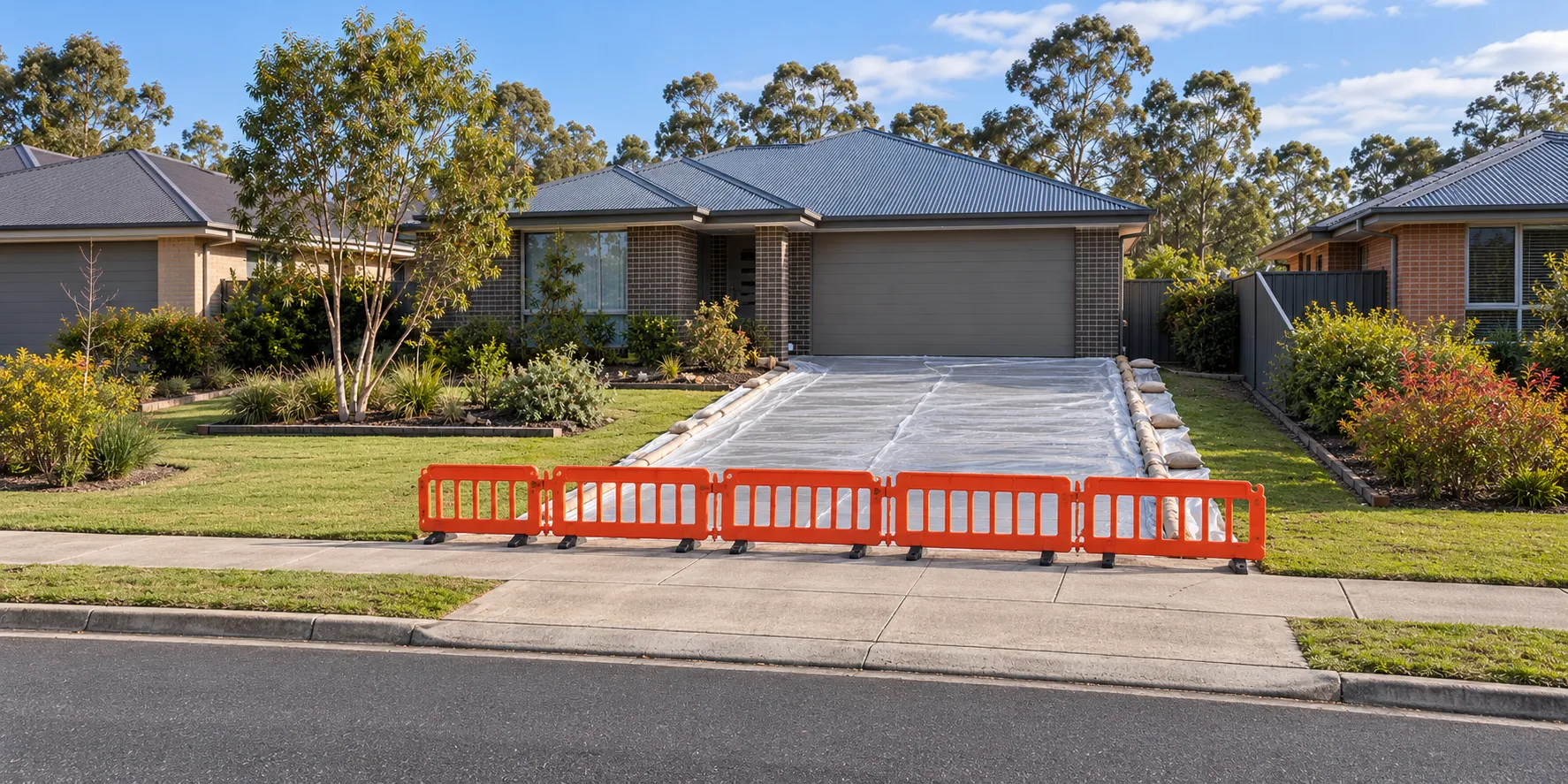
The concrete mix, curing method and conditions after placement all influence how quickly a driveway develops strength. Temperature affects hydration, while hot, dry or windy conditions can increase moisture loss and make curing management important. Cool weather may slow strength development, and rain can affect a fresh surface depending on its timing and intensity.
For local context, the article on how soil and climate affect concrete work explains why site conditions matter in the Hunter Valley.
Waiting periods are useful for planning, but the actual pour conditions should guide the final decision. Ask the concreter whether the expected reopening date remains appropriate after the work is completed.
Approval to use a driveway applies to the vehicles and loads considered during the assessment. It is not automatic permission for every vehicle that can fit through the entrance.
Before arranging heavier access, explain what will arrive, whether the vehicle will turn or reverse and where any support equipment will rest. The loaded weight, movement pattern and contact points can all affect the assessment.
A family car and a loaded removal truck place very different demands on a driveway. A vehicle carrying furniture, building materials or other goods may be heavier than it appears when empty. A trailer also adds loads that may not have been considered when access for a standard car was approved.
For this reason, advice about parking on fresh concrete should identify the intended vehicle rather than simply state that parking is permitted. Approval for a smaller car does not necessarily cover a larger vehicle towing a loaded trailer.
Before a delivery arrives, obtain the vehicle details from the provider and pass them to the concreter. If the load cannot be confirmed, arrange an alternative delivery location or postpone access until the proposed use has been assessed.
Vehicles do more than press down on a driveway. Steering, braking and turning introduce additional forces and turning the wheels while stationary creates different demands from travelling straight across the surface.
Tell the concreter if normal access requires tight turns, reversing or repeated manoeuvring. Permission for limited vehicle access may not cover every movement involved in the usual parking routine.
Trailer jockey wheels, support legs and other small bearing points also deserve attention because they concentrate loads into relatively small areas. Do not assume that placing a board beneath a support or improvising another load-spreading arrangement makes the setup safe. Ask if the proposed load and support method requires professional assessment.
Temporary restrictions during curing are different from permanent limits on what a driveway can carry. Waiting longer does not turn a residential driveway into a surface designed for unrestricted heavy traffic.
The slab's thickness, reinforcement, supporting ground and overall design influence its load capacity. These details cannot be reliably judged from the finished appearance.
If a proposed vehicle or load falls outside the intended use, the concreter may need to seek advice from a professional, such as an engineer. Confirm whether a restriction is temporary or reflects a permanent design limitation before scheduling the same delivery for a later date.
A staged return to use helps protect the driveway while keeping household and delivery arrangements manageable. Before reopening it, obtain clearance from the concreter, confirm which vehicles and movements are permitted and make sure any remaining curing instructions are understood.
Ask the concreter to distinguish between ordinary walking, passenger vehicle access and heavier or unusual loads. Written instructions can help everyone using the property follow the same restrictions.
Clarify whether permission to drive across the driveway also includes parking, turning and reversing. If access is conditional, make sure the conditions are understood before using the surface.
Treat an expected reopening date as a planning estimate rather than automatic approval. If the weather changes, the curing conditions are affected or the instructions are unclear, contact the concreter before allowing traffic.
Delivery bookings can create pressure to reopen a driveway early when a vehicle needs to reach a garage or entrance. Contact the provider before arrival and explain that access is restricted.
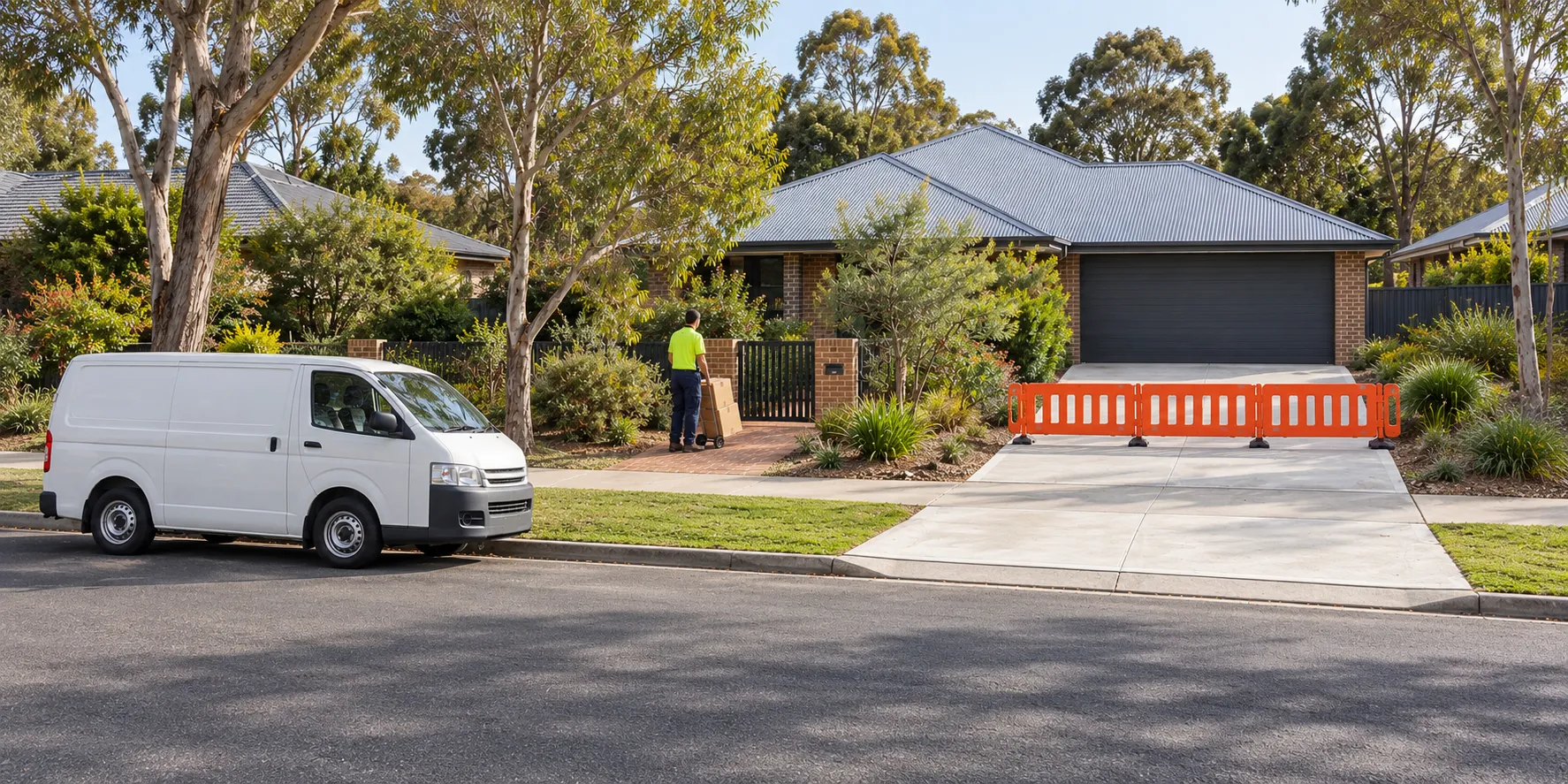
Arrange an alternative delivery point that does not depend on the new concrete, or reschedule if the vehicle needs to enter the driveway. Do not rely on a driver's willingness to proceed as evidence that the slab is ready. The driver may not know the concrete specification, curing history or intended load capacity.
Make the restrictions clear to household members, visitors and anyone organising deliveries. A single unapproved vehicle can undermine an otherwise careful return-to-use plan.
Coverings, curing treatments and barriers serve different purposes. Do not remove a covering because the driveway looks dry, wash away a treatment or move a barrier simply because foot traffic has been approved.
The pumping crew places concrete where it is needed. Equipment selection, including the differences between boom and line pumps, relates to placement and access, not permission to use the finished slab.
Hunter and Coast Concrete Pumping provides the pumping component of concrete work, helping place concrete where it is needed. The concreter responsible for the finished driveway should confirm curing requirements and when the surface can safely carry the proposed traffic, obtaining specialist advice.
Before returning to normal use, ensure that approval is clear, alternative parking is available until then and any heavy deliveries have been arranged around the restrictions. Extra planning can protect the new driveway and avoid damage that may require costly repairs.