
Choosing between exposed aggregate and plain concrete involves more than appearance. For driveways, paths, pool surrounds and outdoor areas, the finish needs to withstand traffic, weather and everyday use while remaining practical to maintain. Hunter and Coast Concrete Pumping understands these considerations are important for homeowners planning concrete driveways in Hunter Valley.
Both finishes can provide decades of service when properly designed and installed, but they age differently. Exposed aggregate offers greater surface wear resistance, while plain concrete provides a simpler, more uniform finish that can be easier to maintain.
Understanding how each option performs under traffic, weather and regular use can help property owners compare durability, maintenance requirements and long-term value before choosing a concrete finish.
.webp)
Exposed aggregate and plain concrete use similar base materials, but their finishing methods create different surface characteristics. Both are suitable for driveways, paths and outdoor areas, but they differ in how they handle traffic, weather, stains and everyday wear.
Plain concrete has a smooth or lightly textured surface where cement paste remains visible. This surface can wear under vehicle and foot traffic, while UV exposure, moisture and temperature changes may contribute to staining, dusting and fine cracking.
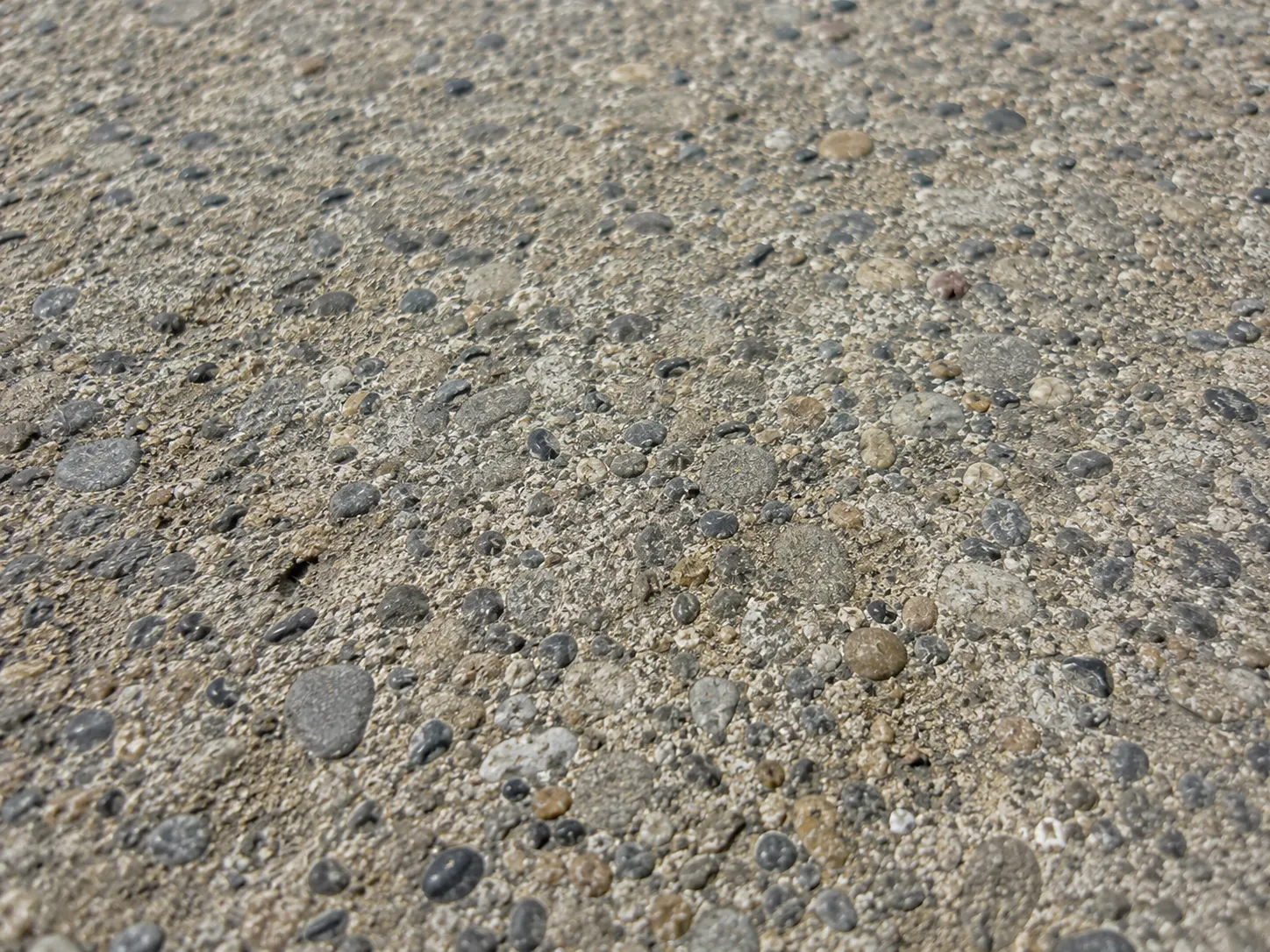
Exposed aggregate is created by removing the top layer of cement paste to reveal the decorative stones within the concrete. These aggregates form the working surface and are more resistant to abrasion than cement paste, helping the finish withstand tyre movement, foot traffic and everyday scuffing.
The main differences include:
The finish mainly influences how the surface looks and wears. The underlying concrete still depends on proper design, installation and maintenance to achieve a long service life.
A properly designed and installed concrete driveway can provide decades of service. Its actual lifespan depends on factors such as concrete quality, ground preparation, traffic, drainage, weather and maintenance. The choice between plain concrete and exposed aggregate mainly affects how the surface wears and looks rather than the fundamental strength of the slab.
A properly constructed plain concrete driveway can provide 20 to 30 years or more of service, depending on site conditions and use. While the slab may remain structurally sound, surface wear, staining, dusting and visible cracking can make an older driveway appear worn sooner.
Exposed aggregate can also provide several decades of service when correctly specified, installed and maintained. The exposed stone provides greater resistance to everyday abrasion, while the varied texture can make minor stains, chips and hairline cracks less noticeable.
Either finish can have its service life shortened by:
Rather than assuming one finish will always last longer, it is more accurate to consider exposed aggregate as having an advantage in surface wear resistance and appearance retention, while the structural lifespan of both depends heavily on how the slab is designed and constructed.
The lifespan of a concrete driveway depends on much more than its surface finish. Concrete quality, ground preparation, drainage, reinforcement, traffic and surrounding conditions all influence how well the slab performs. Addressing these factors before installation can help reduce premature cracking, settlement and surface damage.
The lifespan of a concrete driveway depends on much more than its surface finish. Concrete quality, ground preparation, drainage, reinforcement, traffic and surrounding conditions all influence how well the slab performs. Addressing these factors before installation can help reduce premature cracking, settlement and surface damage.
Understanding why concrete driveways crack can also help property owners prioritise subgrade preparation, drainage, reinforcement and joint placement.
A stable, well-compacted base is essential for preventing movement and settlement. Soft spots, poorly compacted fill and inadequate subgrade preparation can lead to cracking or uneven sections. Appropriate reinforcement can also help control cracking and support the slab under expected loads.
Water should drain away from the driveway rather than pond on or beneath the slab. Understanding why water pools on driveways can help identify problems involving the slab’s fall, surface levels, surrounding grading or drainage system. Poor drainage can contribute to erosion, settlement and deterioration around cracks and joints. Falls, downpipes, irrigation and surrounding landscaping should all be considered during installation.
Driveway grading should also form part of broader residential stormwater management so runoff is directed safely without causing erosion, ponding or problems on neighbouring properties.
Regular passenger vehicles place less stress on a driveway than caravans, trailers or heavy vehicles. Repeated tight turning can also increase surface stress. The slab should therefore be designed around its expected loading, including appropriate thickness, reinforcement and concrete strength.
Heat, sunlight, rain and changing moisture conditions can contribute to surface weathering and movement. Trees can also affect longevity when roots grow beneath or besides the slab and cause lifting or cracking.
These structural and site conditions have a greater influence on driveway lifespan than whether the surface is plain or exposed aggregate.
The durability of a concrete driveway depends more on how it is designed, prepared, placed and cured than whether it has a plain or exposed aggregate finish. A well-installed plain concrete slab can outperform poorly installed exposed aggregate, making installation quality one of the most important factors in long-term performance.
Installation should account for local soil, drainage, moisture and weather conditions. Important considerations include:
NSW licensing requirements may apply to licensed general concreting work, including concrete placement, exposed aggregate work, repairs and resurfacing. These fundamentals apply equally to plain and exposed aggregate concrete. Exposed aggregate may provide greater surface wear resistance, but it cannot compensate for an unsuitable mix, unstable base or poor curing.
Climate and weather can influence how quickly a concrete driveway develops surface wear, cracking and other signs of ageing. For properties, strong sunlight, heavy rain, temperature changes and ground conditions should be considered alongside drainage, concrete quality and maintenance.
Strong sunlight and repeated heating and cooling can cause concrete to expand and contract, placing stress on joints and existing cracks. Plain concrete may show fading, crazing and surface changes more noticeably, while exposed aggregate can disguise minor weathering through its varied texture and colour.
Sealing can help reduce moisture and contaminant penetration while protecting the appearance of either finish, although it cannot prevent movement-related cracking caused by underlying site conditions.
Rain is unlikely to damage a well-constructed driveway on its own, but ongoing ponding or water collecting beneath the slab can contribute to erosion, settlement and deterioration around cracks and joints.
Proper falls and drainage are therefore important. Downpipes, irrigation and landscaping should also be positioned so concentrated water flows do not repeatedly run across or beneath the driveway. Exposed aggregate can provide good traction when wet, although its textured surface may require more frequent cleaning to prevent dirt and organic build-up.
Weather can affect the ground supporting the driveway. Heavy rain may soften poorly prepared areas, while prolonged dry conditions can cause movement in some soil types. Uneven movement beneath the slab can lead to cracking regardless of the chosen finish.
Tree roots can create similar problems by lifting or placing pressure on sections of concrete. Considering existing vegetation, future root growth and site drainage during installation can help reduce these risks.
Both finishes can perform well in different conditions when they are properly designed and installed. Stable ground and effective drainage have a greater influence on longevity than the surface finish itself.
Exposed aggregate and plain concrete can develop cracking, staining and surface wear, but the signs of ageing tend to look different. Recognising these changes can help property owners identify problems early and determine when cleaning, sealing or repairs may be needed.
Plain concrete may develop:
Exposed aggregate may develop:
Both finishes can crack because of ground movement, settlement, poor drainage, shrinkage or inadequate jointing. Cracks tend to be more noticeable on plain concrete because they contrast with its uniform surface. Exposed aggregate can disguise fine cracks visually, but it can still allow moisture into the slab and should not be ignored.
Edge damage can also affect either finish. Plain concrete may chip or break at exposed corners, while poorly installed exposed aggregate can experience ravelling where individual stones become loose.
Sun, rain and repeated wet-and-dry cycles can change the appearance of both surfaces. Plain concrete tends to show fading and stains more clearly, while exposed aggregate's varied colour and texture can hide minor discolouration.
The textured surface can, however, collect dirt, leaves and organic material. Regular cleaning and appropriate sealing can help maintain the appearance of either finish.
Visible surface wear does not necessarily mean the driveway is structurally failing. Early inspection can help distinguish normal ageing from cracking, settlement or deterioration requiring repair.
No, exposed aggregate does not necessarily require more repairs than plain concrete. Its harder stone surface can resist everyday abrasion from vehicles and foot traffic better than a plain cement-paste finish. However, it can develop different issues, like loose stones, surface ravelling, or deterioration between the aggregates.
Repair frequency depends more on installation quality, drainage, ground conditions, traffic and maintenance than the surface finish itself. A well-installed exposed aggregate driveway can perform for decades with routine cleaning, sealing and occasional minor repairs.
Common issues to monitor include:
Plain concrete can experience many of the same underlying issues, but surface wear, cracking and staining are often more noticeable against its uniform finish.
Sealing can help protect surfaces, but it cannot correct structural problems caused by poor drainage, ground movement or inadequate construction.
Exposed aggregate does not inherently need more repairs. With proper installation and maintenance, repair needs can be limited to routine surface care and isolated damage rather than frequent major work.
Both exposed aggregate and plain concrete can provide decades of service when properly maintained. Exposed aggregate may need slightly more attention because its textured surface can collect dirt and organic matter, but the basic maintenance requirements are similar.
A practical maintenance routine should focus on:
Neither finish should require intensive maintenance when correctly installed. Consistent cleaning, appropriate sealing and early repairs can help protect the surface and extend its usable and visual life.
Yes, exposed aggregate can be the better choice for longevity when surface wear and appearance retention are priorities. Its hard aggregate surface provides better resistance to abrasion, while its varied texture can disguise minor stains, chips and surface wear better than plain concrete.
However, exposed aggregate is not automatically more structurally durable. Proper mix design, subgrade preparation, reinforcement, drainage, placement and curing have a greater influence on the underlying slab's lifespan. A well-installed plain concrete driveway can therefore outperform poorly constructed exposed aggregate.
Exposed aggregate also requires appropriate maintenance to retain its advantages. Regular cleaning and sealing can help protect the surface from moisture, staining and wear, particularly in areas exposed to heavy traffic or weather.
Whether exposed aggregate lasts longer than plain concrete depends largely on how the concrete is designed, installed and maintained. Exposed aggregate offers better surface wear resistance, good wet-weather grip and a finish that can disguise minor stains and imperfections, while plain concrete remains a practical option for those wanting a simple and uniform surface.
For property owners, the most durable choice is one that suits the site, expected use and local conditions. Hunter and Coast Concrete Pumping can help ensure concrete is placed correctly and prepared for reliable long-term performance, whatever finish is selected.